


How to Make Perfume Last Longer: Application Tips That Work
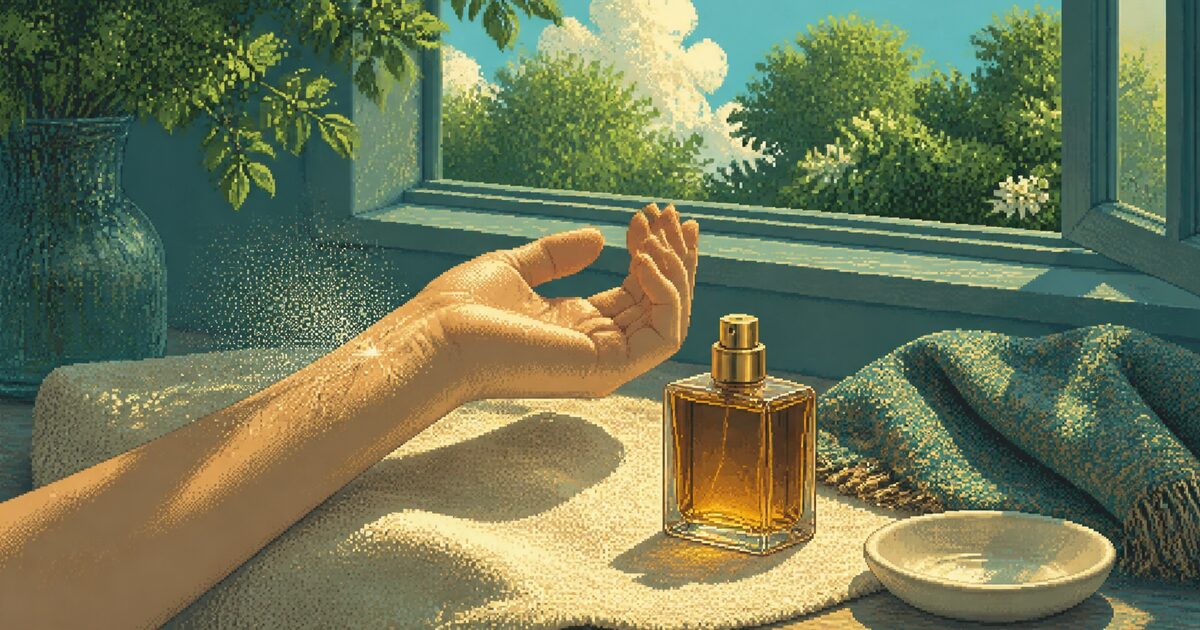
Two people wearing the exact same fragrance can get wildly different results — one still smells great at 6pm, the other's faded by lunch. The fragrance isn't the variable. Application is.
1. Moisturize before you spray
Fragrance clings to hydrated skin far better than dry skin. Dry skin is more porous and evaporates fragrance oils faster; a fragrance-free lotion or petroleum jelly on pulse points right before spraying gives the scent something to hold onto.
2. Target pulse points — but don't stop there
Wrists, neck, and behind the ears are warm, blood-flow-rich areas that help "diffuse" a scent throughout the day — the warmth gently releases fragrance in waves. But also consider inner elbows, chest, and lower back — larger, less-exposed skin areas that don't get washed or rubbed against fabric as often as wrists do.
3. Spray, don't rub
Rubbing your wrists together after applying breaks down the top and even middle-note molecules through friction and heat, which is exactly the opposite of what you want — it accelerates the fade instead of slowing it. Spray and let it dry naturally.
4. Layer with matching unscented or scented products
If your fragrance has a matching body lotion or shower gel, use it. Layering the same scent family in an unscented base builds a foundation the spray-on fragrance can sit on top of, extending both intensity and longevity noticeably compared to fragrance alone on bare skin.
5. Apply right after showering
Warm, slightly damp, freshly-cleaned skin (with open pores) absorbs and holds fragrance better than skin later in the day that's picked up oils, sweat, or other product residue that compete with the perfume.
6. Don't store your perfume in the bathroom
Heat, humidity, and light — all present in most bathrooms — degrade fragrance oils over time, weakening a bottle's projection and longevity months before you'd expect. Store perfume in a cool, dark, dry place instead, like a closet or drawer.
7. Choose base-note-heavy fragrances when longevity matters
As covered in fragrance-note structure, base notes (amber, oud, sandalwood, musk, vanilla) are what lasts. If a fragrance leans heavily on light citrus or green top notes with a thin base, no amount of application technique will make it an all-day scent — the composition itself has a shorter natural lifespan.
8. Consider concentration, not just brand
EDT (eau de toilette) typically holds 5–15% fragrance oil; EDP (eau de parfum) usually 15–20%; pure parfum higher still. Higher concentration generally — though not always — means longer wear. If a favorite scent fades too fast, check whether it's available in a higher concentration before giving up on it.
9. Reapply strategically, not randomly
Rather than a full second application, carry a small decant or rollerball and touch up pulse points once, around the 4–6 hour mark — right as base notes are still present but top and middle notes have faded. A light touch-up refreshes the top layer without overwhelming the base that's already developed.
None of these individually will double a fragrance's lifespan. Together, they compound — and the gap between "gone by noon" and "still there at dinner" usually comes down to three or four of these habits, not some mythical "long-lasting perfume" you haven't found yet.