


Pour-Over vs French Press: Which Brew Method Is Right for You
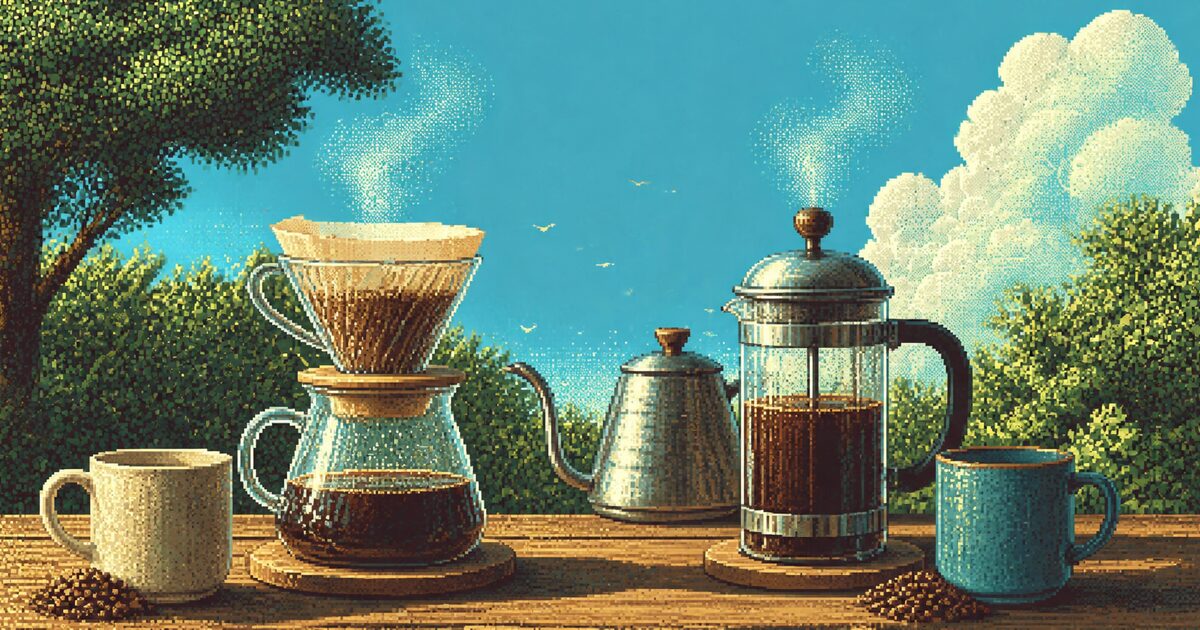
Ask ten coffee people which is better, pour-over or French press, and you'll get ten confident, contradictory answers. The honest answer is that they're not really competing for the same job — they produce genuinely different drinks from nearly the same beans and nearly the same ratio.
The ratio is almost identical
Both methods land in the same general range: 1:15 to 1:17, coffee to water by weight. Pour-over tends to sit a touch leaner, around 1:16, while French press is often brewed slightly stronger, closer to 1:15. If you've ever found French press "stronger," part of that is real — but most of it is something else entirely.
The filter is what actually separates them
A pour-over's paper filter strips out the coffee's natural oils and the finest particles (fines) along with the grounds. What's left in the cup is clean, bright, and light-bodied — you taste acidity and individual flavor notes clearly, the way you'd taste a well-made pour-over from a specialty café.
A French press's metal mesh filter lets oils and fines straight through into your cup. That's what gives French press its full-bodied, heavier mouthfeel — those oils and micro-particles add texture and a perceived richness that pour-over simply doesn't have, because pour-over filters them out entirely.
Neither is "more concentrated." They're extracting similar amounts of coffee — they just let different parts of it reach your cup.
Caffeine: closer than you'd think
If you're choosing based on caffeine content, don't bother — the difference is marginal. One commonly cited study found French press coffee measured around 742mg of caffeine per liter versus roughly 692mg/L for pour-over, a gap that's dwarfed by how much coffee you actually use and which beans you're brewing. Bean choice and dose matter far more than method here.
So which should you actually use?
- Pick pour-over if you want a cleaner cup that shows off a specific bean's character — bright, fruity, single-origin coffees especially benefit, since you're not muddying delicate notes with oils.
- Pick French press if you want something heavier and more forgiving — good for darker roasts, blends, or mornings where you want body over nuance and don't want to fuss over pouring technique.
- Pick French press if you hate cleaning paper filters or don't want to buy them; it's genuinely lower-maintenance day to day.
- Pick pour-over if you enjoy the ritual — pour-over rewards attention to pour rate and bloom time in a way French press just doesn't ask for.
A quick practical tip either way
Grind fresh, right before brewing, and weigh both coffee and water rather than eyeballing scoops. That one habit closes more of the quality gap between "okay coffee" and "great coffee" than switching brew methods ever will — the method matters less than the fundamentals underneath it.